The works of Stefanos Souvatzoglou develop either as microcosms of multiple forms or as forms that carry their own microcosm. They render, with a surrealistic spirit, a kind of organic continuity between different forms and manifestations of the world. Their style is grounded in the construction and development of a personal vocabulary, founded on the expressive qualities of materials and the inventive handling of ready-made forms.
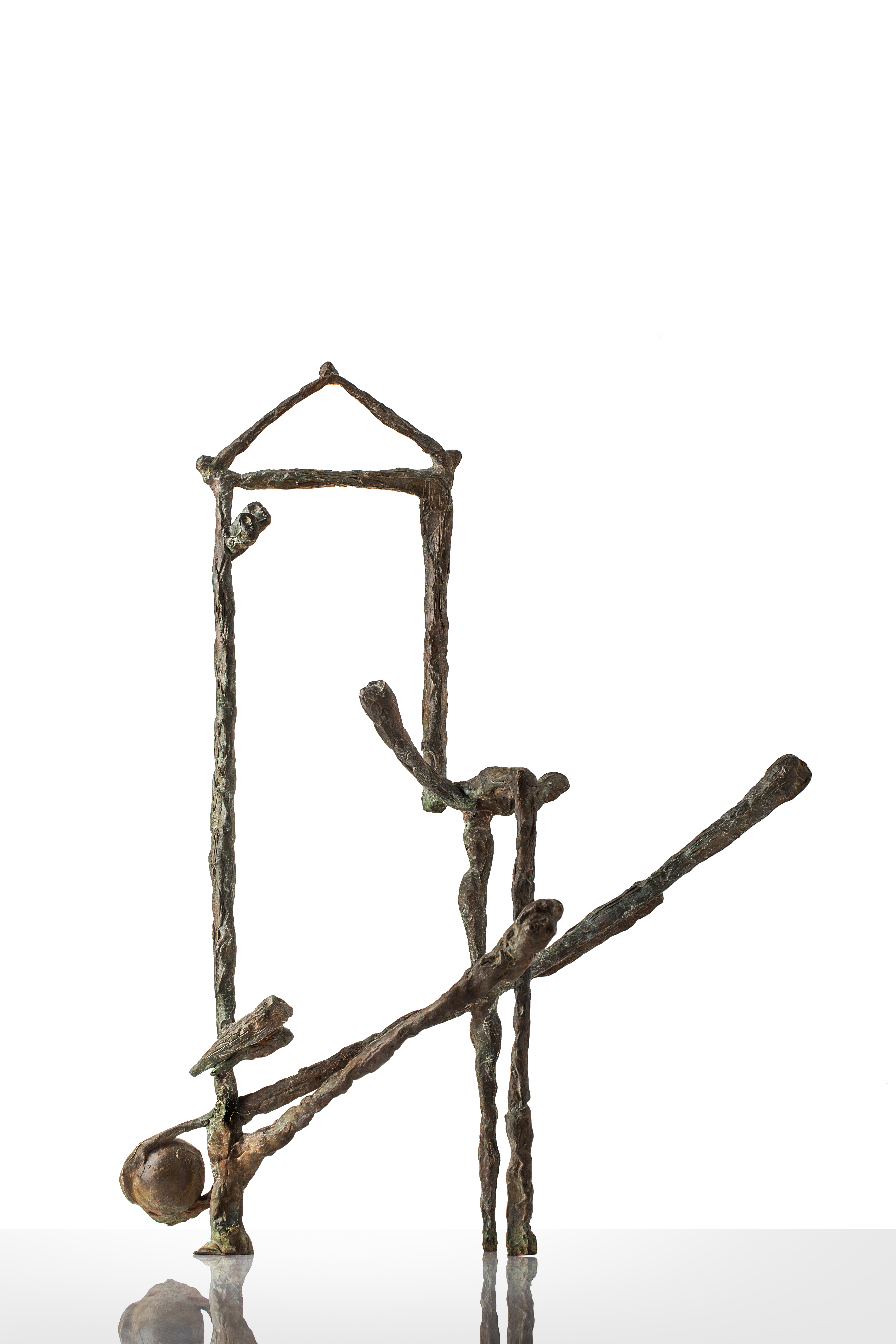
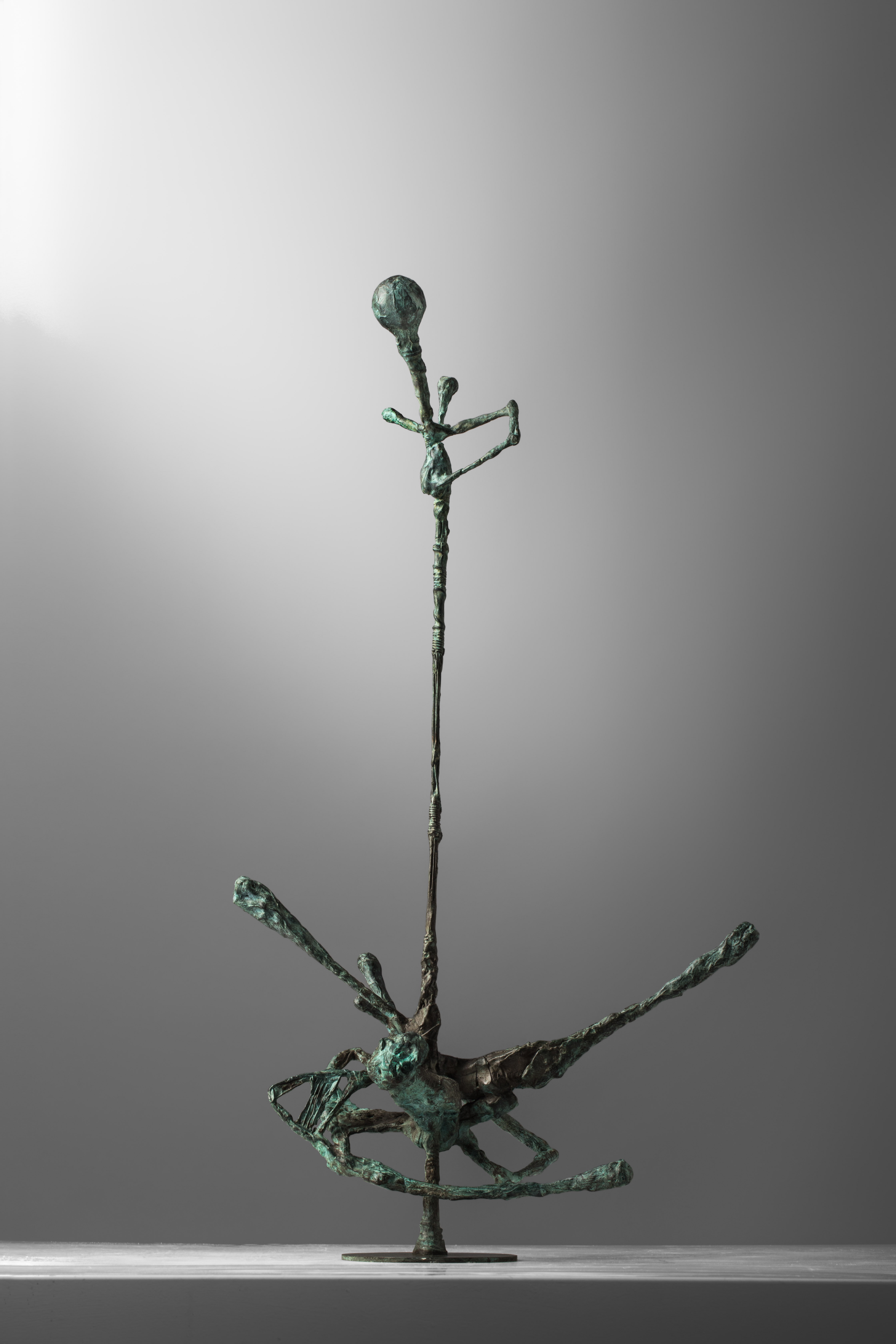
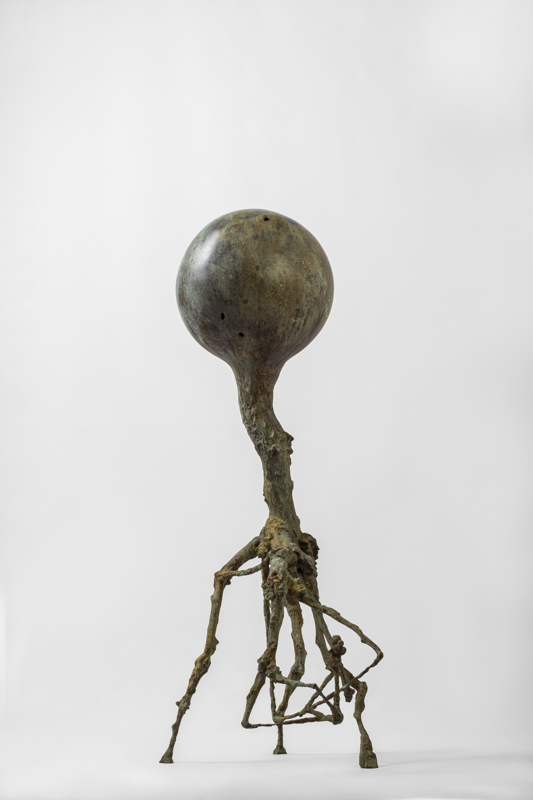
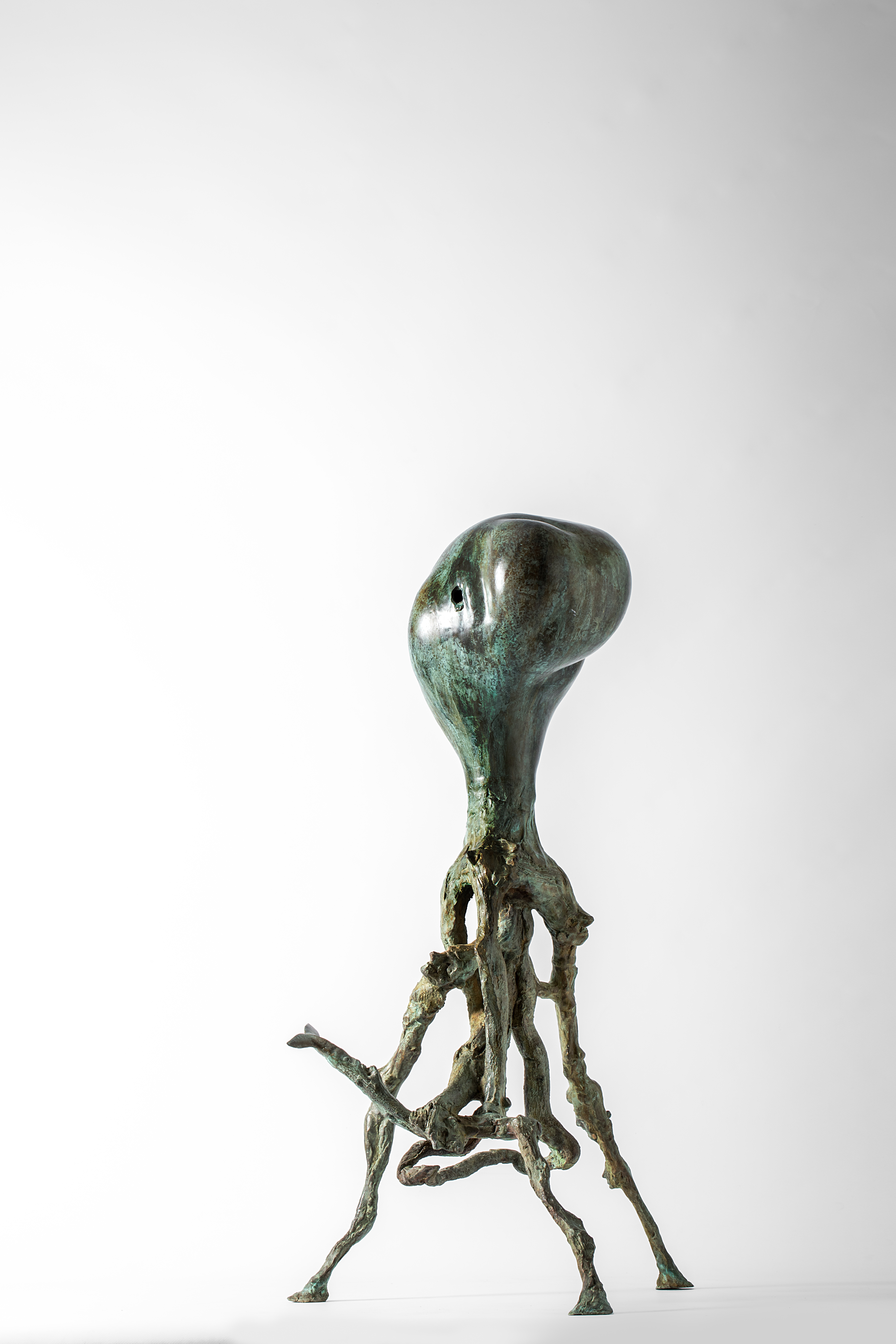
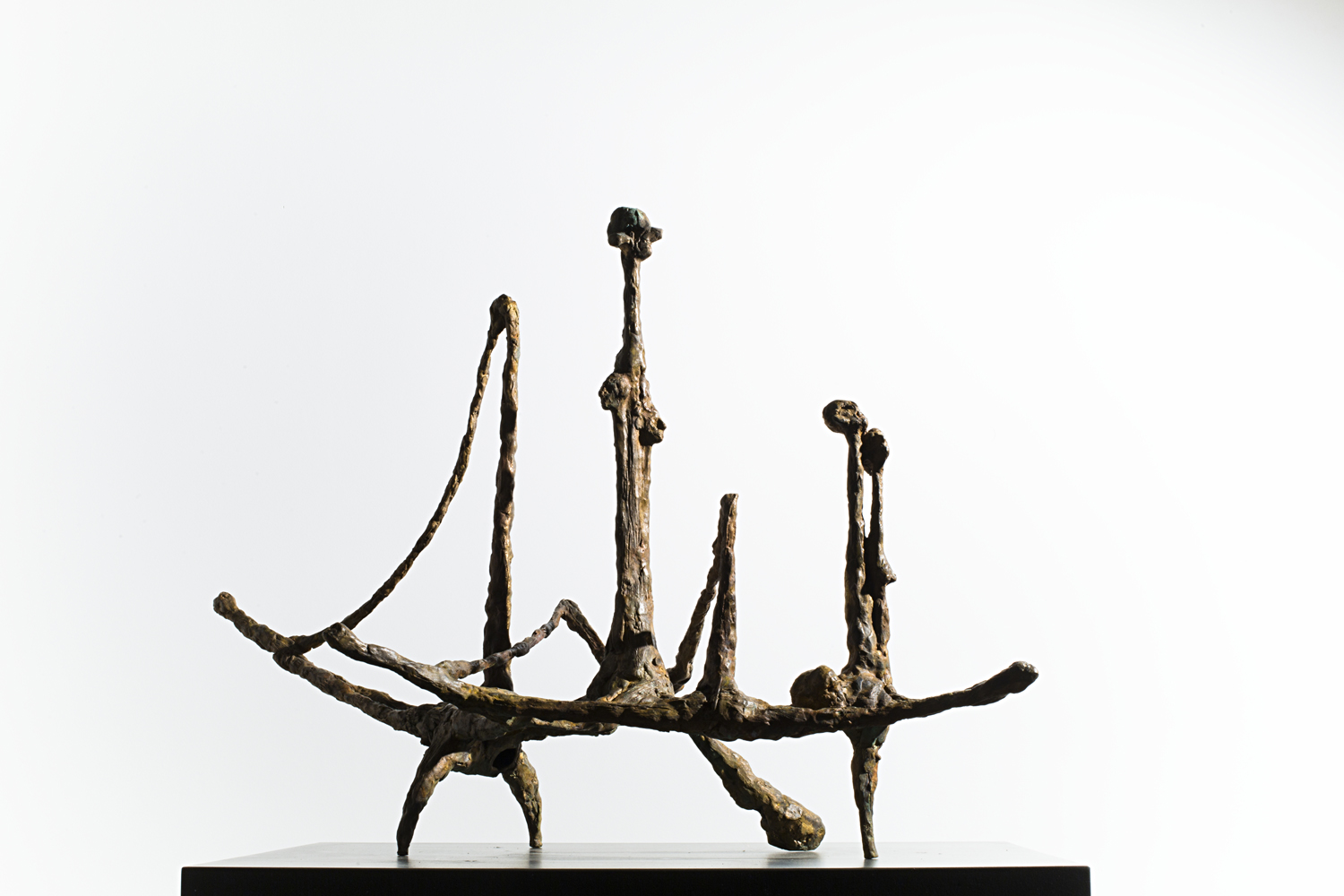
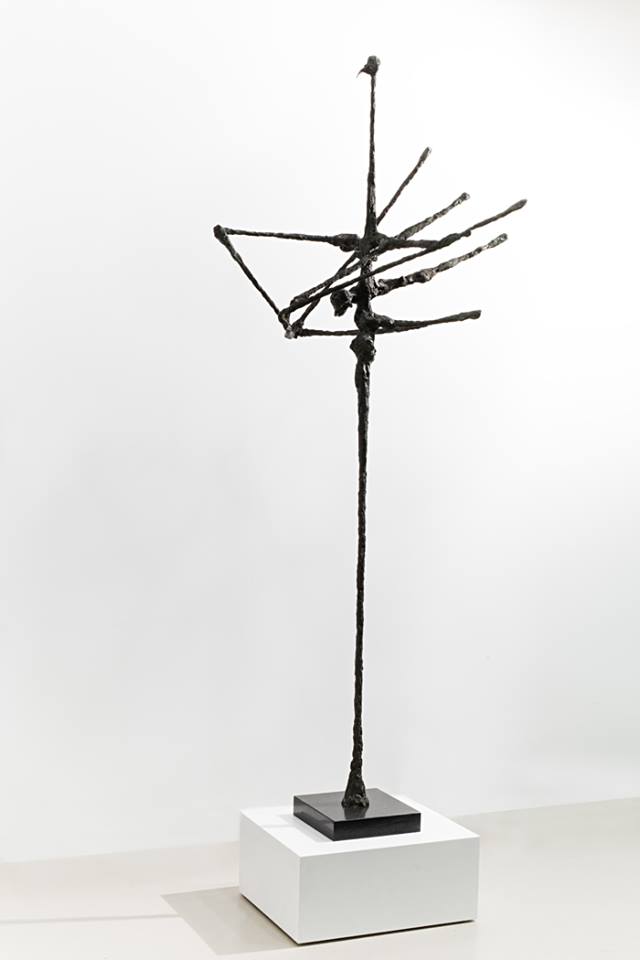
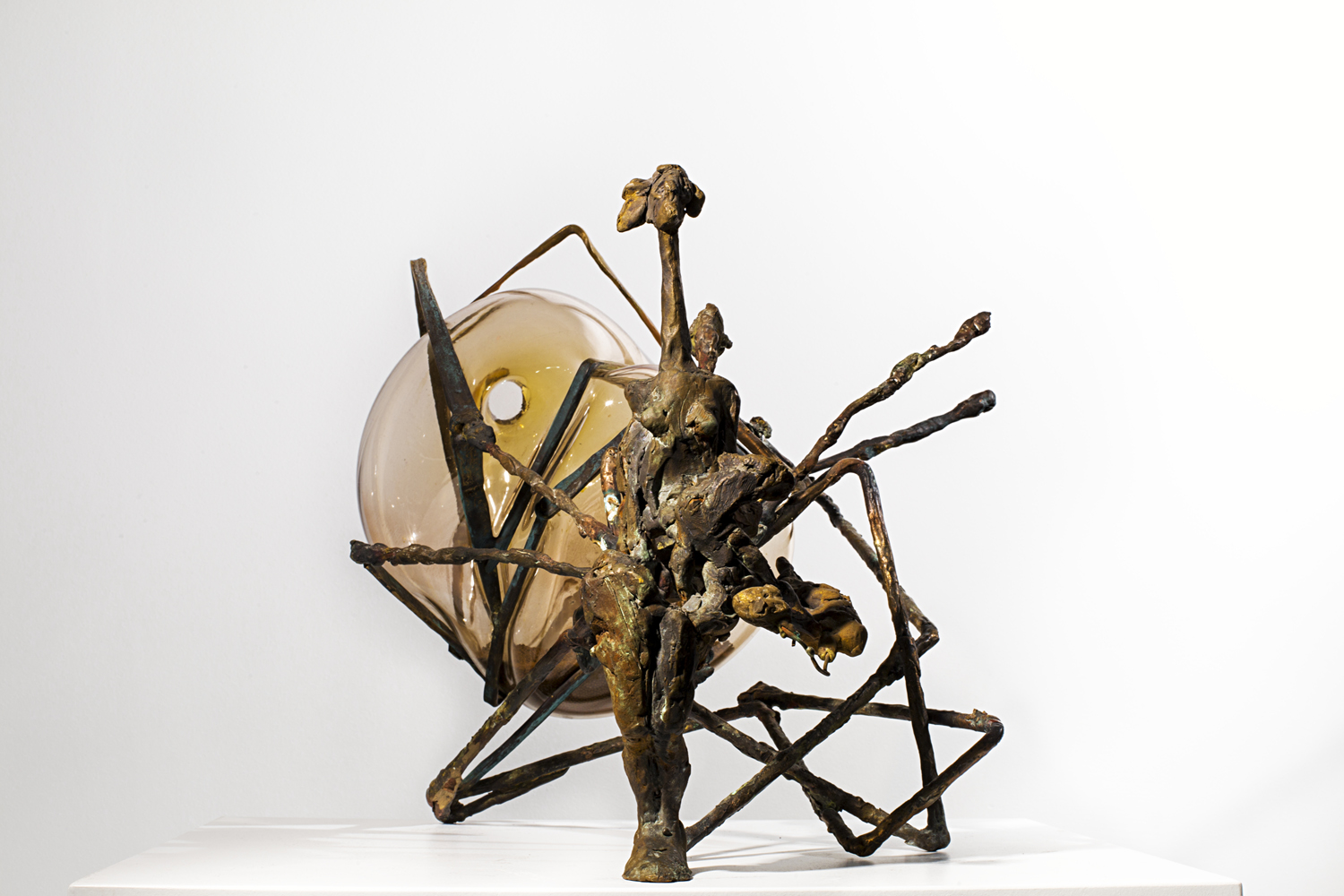
They are primarily freestanding sculptures of medium and large scale, modeled in wax and cast in bronze. They are distinguished by the linearity of the form, the incorporation of ready-made plastic elements, the richly textured surfaces, and the latent repetition of the human figure.
Organized along vertical and horizontal axes, the sculptures create areas of density and sparseness that emerge from the modulation of mass and the interweaving of form in space. Their forms develop linearly, conveying the energies of the shapes and culminating in miniature anthropomorphic or osteomorphic terminations. Through their movement, they define a permeable space of shifting formal relationships, perceived as a vital space of the forms.
In Souvatzoglou’s works, human, vegetal, or animal forms are parts of a nature that acts and expresses itself in manifold ways. They are rendered fragmentarily, with animated contours, conveying a sense of the vital energy that permeates organic matter. Although they may plastically recall the figures of Giacometti, their content differs substantially. They do not suggest an existential space but rather an organism functioning as a corporeal–spiritual continuum. In Souvatzoglou’s work, the spiritual is a property of matter.
Although their subjects are inspired by areas of the rational world, these works open up to a dreamlike, surreal space governed by its own internal laws. They imply the existence of an indivisible world beneath a surface of knowledge and logical world that is gradually revealed, and only under certain conditions, to its viewer.








 Stefanos Souvatzoglou